Older Than Dirt
“How old is the earth?” has been a recurring question for centuries, and the dates and procedures used to estimate its age have surely evolved with time. Enter “age of the earth” into your favorite search engine, and you’ll get buried by hits. This post — prompted by one of Red’s comments to the recent missive “What’s in a Name” — is only designed to be a brief overview of the highlights regarding this deceptively elusive query.
One caveat before continuing: Deceptively elusive, indeed! While researching this, the amount of contradictory information I found regarding even some of the most basic factors (the reporting of Lord Kelvin’s results immediately comes to mind) was enough to drive me baileyboobonkers. So, while the following is as close to a true synopsis as I can get, any effort to duplicate the details may provide you with wildly different data. Consider two guys walking down the street: which one is out of step?
With that being said…
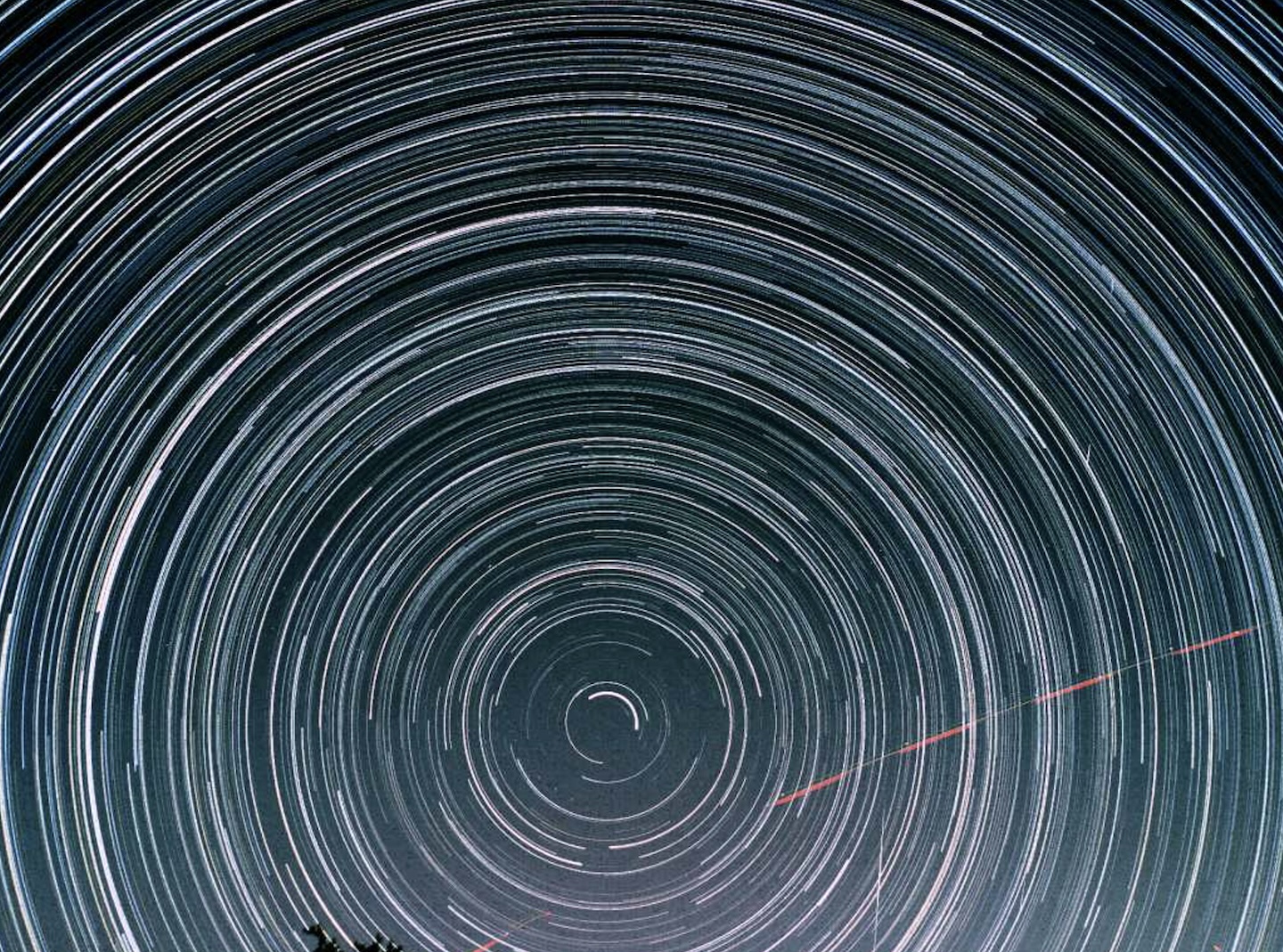
To my simple mind, the first hurdle to be cleared is obvious: How could someone ever even begin to figure this out? Just the thought gets me all wobbly in the knees and makes my head spin.
Marker Bed, my novel and geology primer is now available on Amazon. With heroes and a villain — and Xoix of course — the story takes place 300,000,000 years from now and documents the recognition of humanity in the fossil record. It is a must read for anyone who loves the earth and hopes that it will survive our tender mercies. If you haven’t already obtained your copy, I encourage you to do so now. Click here to go to the Amazon website and lock in your copy.
The first official, documented attempt to calculate an age for the planet (that I am aware of) came in the early 1600s. At that time, the Catholic Church was pretty much in charge of the European portion of the Old World and the recently discovered New, and James Ussher — Archbishop of Armagh and Primate of All Ireland — was tasked with coming up with an acceptable date and age. This may not have represented his life’s work, but being who he was (and who he worked for), Ussher was motivated to do his best.

Since the only reliable (and approved) source of information Ussher had to work with was the Bible (this was before Google), that’s what he used. But he was still stuck with the same problem and poser: “Now what?”
I would imagine he spent years just coming up with a plan.
The method Ussher concocted was brilliant — especially when you consider that this took place four hundred years ago. As I understand the legend, he started off by telling himself that the one thing he knew for certain was that the Earth was older than he was. He also knew he had a father, and so the Earth had to be older than him, too.
Well, since Archbishop Ussher knew both his birthday and his father’s — and that the earth had to be older than both of them — he’d already come up with a minimum age for the planet. After that, it was just a matter of working back through his grandfather… and beyond.
Fortunately, this was a time when genealogy was much more important than it is today, and Usher had detailed birth and death records going back generations. So, he traced his lineage back through time until he could tie his earliest known ancestor into the Bible. Good news! He could finally move his genealogical search to the only source of information that was trustworthy and authorized by his boss in Rome (what his boss’s boss had to say about all this remains unknown).
Ussher likely relied heavily on selected verses in Genesis and 1 Chronicles, both of which were included in the recently published (1611) King James version of the Bible (while cumbersome by today’s standards, it was likely all he had to work with — efforts to translate the KJV into an easier prose we can all understand didn’t begin until several hundred years later). Those specific verses of the Bible are collectively called the “Begats”. As used in this case, to “begat” means that somebody sired a child, and these portions of the Bible describe in exquisite detail the genealogy of the Old Testament.
Gen. 4:18: “And unto Enoch was born Irad: and Irad begat Mehujael: and Mehujael begat Methusael: and Methusael begat Lamech…”

So, Ussher worked his way back through the Begats until he got to Adam who — according to Genesis — was created by God on the sixth day. Ussher then continued through the earlier stages of creation to the first day when the amorphous, water-covered earth was formed out of the void.
And Ussher said: “Let there be a date…”
So Archbishop Ussher compiled his data, and in 1654 he reported that the earth had been created on Saturday October 22nd, 4004 BC at 6:00 pm.
Mission accomplished! Even if Catholic clergy are forbidden male/female connubial relations, they have never been opposed to a glass (or two) of wine when appropriate. I would imagine that Jimbo polished off a bottle (or two) that evening in celebration of his success.
Ussher’s chronology has in recent years been subject to criticism, including artistic: as in the play Inherit the Wind; and the 1990 fantasy novel Good Omens, which alleges that “he is off by a quarter of an hour”.

An alternate viewpoint — shared by many with open minds — was offered by the American paleontologist Stephen Jay Gould in his 1991 essay “Fall in the House of Ussher” when, while disagreeing with Ussher’s timeline, he nevertheless wrote:
I shall be defending Ussher’s chronology as an honorable effort for its time and arguing that our usual ridicule only records a lamentable small-mindedness based on mistaken use of present criteria to judge a distant and different past. Ussher represented the best of scholarship in his time. He was part of a substantial research tradition, a large community of intellectuals working toward a common goal under an accepted methodology…
No matter: Archbishop Ussher’s age and date stood as the gospel truth until the 1800s, when the new-fangled study of “geology” prompted another look — the earth scientists of the time already suspected that the planet was possibly a wee bit older than 6,000 years.

In 1862 Lord Kelvin, the famous Irish physicist and mathematician, estimated that the earth was between 20 million and 400 million years old. He based his estimate on how long it would take the planet — assuming it started as a molten sphere — to cool enough to have a rigid igneous crust (albeit with an obviously red-hot liquefied interior that would lead to volcanic eruptions). He later revised and narrowed his estimate to between 20 and 30 million years, and apparently ultimately settled on 109 million.
His early efforts seem to have sparked a flurry of cooperative, and often contradictory estimates, starting in the late 1800s and extending into the 1900s. While there are surely many, many more, in the interest of touching on different methodology, I include only a few of the highlights:

Thomas Chrowder Chamberlin (1843 – 1928). In 1899 — and without proposing an actual date that I could find — American geologist and educator T. C. Chamberlin argued that the earth was much older than any of the ages proposed by Lord Kelvin. Co-developed with American astronomer Forest Ray Moulton, his theory proposed that planets formed by the gradual accretion of cold, solid particles (termed “planetesimals”) rather than condensing from a hot molten globe.
Since he was already formulating his own cold, planetesimal origin, Chamberlin argued that there must be some unknown source of heat energy within the earth that would substantially alter Kelvin’s calculations. Without realizing it, Chamberlin and Moulton had anticipated heat from radioactive decay, which had just been recognized but was not yet understood.

John Joly (1857 – 1933) was a geologist and physicist. Another clever Irishman (I’m part Irish, so please keep your oxymoronic observations to yourself), Joly measured ocean salinity, and compared it to the rate ions were being added (especially sodium) via stream flow.
The validity of his methodology was predicated upon several assumptions: the ocean started as fresh (non-saline) water; all waters running across the land also start off pure and potable; and the chemical weathering of the land has produced dissolved ions at a consistent rate throughout all of earthtime. In my mind, the first two sound plausible. The third? Not so much.
But valid or not, with these givens firmly in place, in 1899 Joly stated that the earth was somewhere between 80 and 100 million years old.

William Sollas (1839 – 1936) was a British geologist and anthropologist (Rosie — our heroine in Marker Bed — would have probably thought him the kitty’s patootie). He took a different, and surely unique approach.
The ingenious and meticulous Mr. Sollas measured stratigraphic sections, and compared the thicknesses he observed to the rate that sediments are washed down rivers and deposited on the seafloor. His critical assumption was that sedimentation rates are constant.
By carefully measuring the thickness of earth’s sedimentary layers, he could estimate how many years would be required for the earth to pile up the observable layers of sedimentary rock. A simple calculation, even though his fundamental assumption was likely flawed.
In 1905 he published a collection of essays titled The Age of the Earth and Other Geological Studies, in which he estimated the earth’s age at 26 million years.
After deeper inquiry, and factoring in sedimentation gaps and ocean salinity (he may have been encouraged by the work of John Joly), in 1909 he expanded his estimate for the age of the earth and ocean to fall somewhere between 80 million and 150 million years.
Roughly averaging them together, early estimates put the age of the earth at somewhere around forty million years (40,000,000 years).

All of these early estimates were turned on their heads when radiometric age dating was introduced into the mix. Please refer the previous post Intro to Geologic Time for an overview of absolute ages and radiometric age dating.
Based upon radiometric age dating, the current estimate for earth’s age is 4.54 billion years ago (4,540,000,000 years). So yeah, the old-timers were off by about 4.5 billion years (4,500,000,000 years). But no sweat, that’s how real science is supposed to work.
But there’s still a problem here. The oldest earth rock that’s been dated comes from the Acasta Gneiss in the Northwest Territories of Canada, and is only 4.03 billion years old. So where did the additional 500,000,000 years come from?
A good question with an easy answer, assuming Obie let’s us accept the assumptions.

This takes us back to the original hypothesis proposed by Chamberlin and Moulton that the solar system — all of it — was created at the same time by what is now referred to as the “Nebular Hypothesis”. If true, then the oldest rock found anywhere within our solar system should give a minimum date for the age of the earth as well.
So, in the interest of expediency, some clever astrophysicist proposed that iron-nickel asteroids from the Asteroid Belt between Mars and Jupiter are the remains of the core of a mythical tenth planet (call it Planet X if that floats your boat). And since those fragments give a date of 4.54 billion years (give or take a week), the earth must be the same age.
Pretty slick, huh?


